
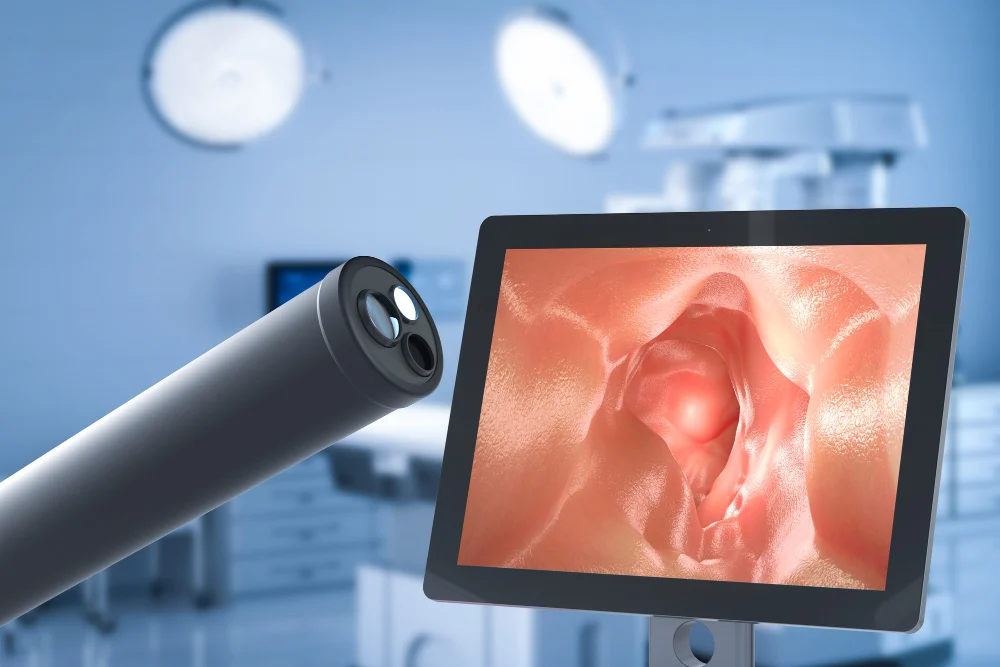
A Swallowable Camera for Answers Deep in the Digestive Tract
Some digestive problems start in the small intestine, an area that standard scopes cannot easily reach. At San Diego Digestive Disease Consultants, INC, our gastroenterologists use capsule endoscopy to take images of this hard-to-see area. The test uses a tiny camera you swallow like a pill, with no sedation and no incisions. We see patients for capsule endoscopy at our offices in San Diego, Poway, Coronado, and Chula Vista.
Request an AppointmentWhat Is Capsule Endoscopy?
Capsule endoscopy is a diagnostic test that uses a small, pill-sized camera to photograph the lining of your digestive tract. As the capsule moves naturally through your system, it captures thousands of images and sends them to a recorder you wear. Your gastroenterologist then reviews the images to look for signs of bleeding, inflammation, ulcers, or other abnormalities.
Because the small intestine is long and winding, it is difficult to examine with a traditional upper endoscopy or colonoscopy. Capsule endoscopy gives us a clear view of the area between the reach of those two procedures.
When Is Capsule Endoscopy Recommended?
Your doctor may suggest this test when other exams have not explained your symptoms. Common reasons include:
- Bleeding in the digestive tract when the source has not been found
- Unexplained iron-deficiency anemia
- Chronic abdominal pain, diarrhea, or other ongoing symptoms
- Evaluation or monitoring of inflammatory bowel conditions such as Crohn’s disease
- Looking for polyps, tumors, or other growths in the small intestine
- Screening for suspected celiac disease complications or small bowel injury
What to Expect During the Procedure
Before the Test
Our team will give you specific instructions to follow. In most cases, you will be asked to stop eating and drinking for a set period beforehand, and you may need to take a bowel preparation so the camera has a clear view. Tell us about all medications you take and any history of intestinal blockage, prior abdominal surgery, or swallowing difficulty.
During the Test
You will swallow the capsule with water. A recorder, worn on a belt or connected to sensors placed on your abdomen, collects the images as the capsule travels. Most patients can go about their day while the capsule works, following the guidelines we provide about eating, drinking, and activity.
After the Test
The capsule passes naturally in a bowel movement and does not need to be retrieved. You will return the recorder to our office, and your gastroenterologist will review the images and go over the findings with you. If the results point to a problem, we will talk through next steps and treatment options.
Benefits of Capsule Endoscopy
- Non-invasive, with no incisions
- Typically performed without sedation
- Gives a view of the small intestine that other scopes may not reach
- Helps find the cause of bleeding and unexplained symptoms
- Allows most patients to stay comfortable and mobile during the test
Capsule endoscopy is often part of a larger plan. Depending on your results, we may recommend further testing such as endoscopic ultrasonography. You can learn more about everything we offer on our gastroenterology services page.
Capsule Endoscopy FAQs
Is capsule endoscopy painful?
Most patients find it comfortable. You simply swallow the capsule with water, and you should not feel it moving through your digestive tract. Sedation is typically not needed.
How long does capsule endoscopy take?
The capsule travels through your digestive system over several hours while the recorder collects images. Your doctor will tell you how long to wear the recorder and when to return it to our office.
How do I prepare for capsule endoscopy?
You will receive written instructions from our office. These usually include a period of fasting and, in many cases, a bowel preparation so the images are clear. Be sure to tell us about your medications and medical history before the test.
What happens to the capsule after the test?
The capsule passes out of your body naturally in a bowel movement. It is not reused, and you do not need to retrieve it. Let us know if you are unsure whether it has passed.
Are there any risks with capsule endoscopy?
Capsule endoscopy is considered safe for most patients. In rare cases, the capsule can become stuck in a narrowed area of the digestive tract. Your gastroenterologist will review your history to decide whether the test is right for you, and will tell you which symptoms to report right away.
Can I go back to normal activities after swallowing the capsule?
Most patients can continue light daily activities while wearing the recorder, following the guidelines we give you. We may ask you to avoid strenuous activity and certain tests, such as MRI, until the capsule has passed.
How do I schedule a capsule endoscopy in San Diego County?
Request an appointment through our website or contact one of our offices in San Diego, Poway, Coronado, or Chula Vista. If you are new to our practice, our new patient information page explains what to bring and how to get started.
Get Answers About Your Digestive Symptoms
If you have unexplained digestive symptoms or have been told you may need a closer look at your small intestine, our team is here to help. Reach out to any of our offices in San Diego, Poway, Coronado, or Chula Vista to talk with a gastroenterologist. You can also contact us online.